
Shipping to the U.S. From Nova Scotia After De Minimis Ended: Duties, CUSMA and Checkout Settings

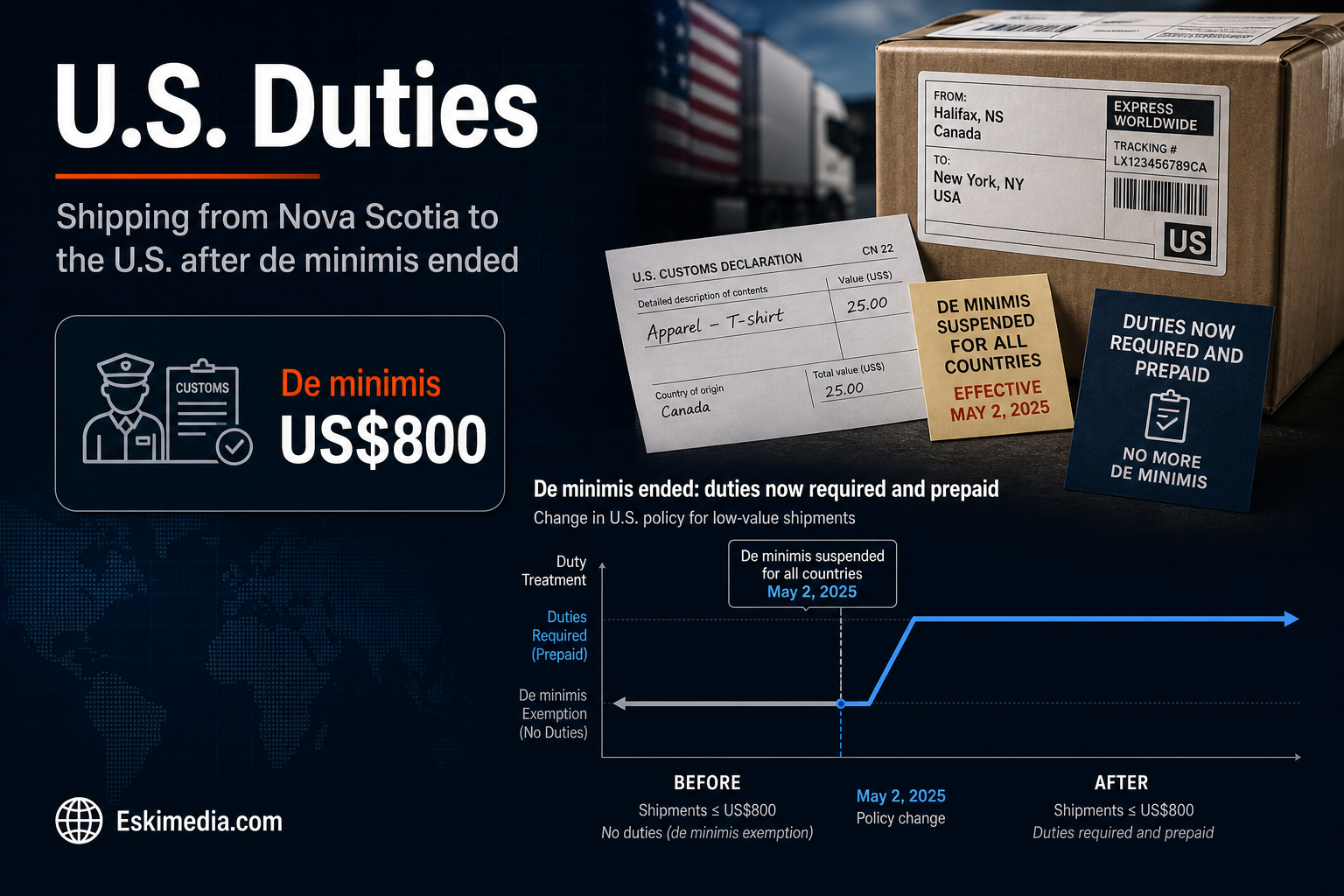
Until August 2025, a Nova Scotia shop could send a $40 order to a customer in Maine with a customs sticker and little else. The U.S. let parcels under US$800 in duty-free. That exemption, known as de minimis, has been suspended for every country since August 29, 2025, and it’s still suspended.
What that means in practice: every commercial parcel you ship to the U.S. now needs proper customs data, and duties have to be dealt with before or on delivery. The duty rates themselves have changed several times since then, through executive orders, a Supreme Court ruling and replacement measures, so no article, this one included, can tell you today’s exact rate for your product. What we can do is show you what’s stable, and set up your store so it copes when the rates move again.
This isn’t customs or legal advice. For anything beyond a small volume of low-value parcels, talk to a customs broker.
What Changed, and What’s Still True in September 2026
- De minimis remains suspended. A Federal Register notice in June 2026 made the suspension indefinite for non-postal shipments, and the U.S. Court of International Trade upheld the suspension in August 2026. Don’t plan on it coming back.
- The duty rates keep moving. The U.S. Supreme Court struck down tariffs imposed under IEEPA in February 2026, and other measures replaced them. Additional tariffs on specific Canadian goods were announced in August 2026. Check the rate that applies to your product when you set up and review it regularly.
- Postal shipments are now duties-paid. Canada Post requires duties to be prepaid before U.S.-bound parcels under US$800 cross the border, through a recognized partner, with a declaration ID on the label.
- CUSMA works differently by channel. Canada Post quotes U.S. Customs guidance that CUSMA preference can’t be claimed for these postal shipments. Through a courier’s formal or informal entry, CUSMA-qualifying goods can generally still claim it. For a store selling Nova Scotia-made products, that difference can be significant.
Postal or Courier: Which Route for Which Order?
| Canada Post (postal) | Courier (UPS, FedEx, Purolator and others) | |
|---|---|---|
| Duties | Prepaid before crossing (DDP), through Canada Post’s partner | Paid by you (DDP) or the customer on delivery (DDU), depending on your setup |
| CUSMA preference | Not available for these postal shipments, per Canada Post’s guidance | Can generally be claimed for qualifying goods on the entry |
| Extra fees | Remittance and processing fees on the duty payment | Brokerage fees, which can be large relative to a small order |
| Best fit | Light, low-value items; small volumes; simple products | Higher-value orders; Canadian-made goods that qualify for CUSMA |
The practical rule: if your products are made in Canada and qualify under CUSMA, compare the courier route carefully before defaulting to postal. If your products are made elsewhere, the postal route with duties prepaid is often simpler for small orders.
Get Your Product Data Right First
Every U.S.-bound parcel now depends on three pieces of data for each product. If they’re missing or wrong, duties are miscalculated and parcels get held.
- HS code, the international classification for the product. In Shopify, it’s a field on each product under customs information. In WooCommerce, you’ll need a plugin or your shipping app to store it.
- Country of origin, meaning where the product was made, not where you ship from. A sweater knitted in Nova Scotia and a sweater made overseas that you resell are different for duty purposes.
- An accurate value and description. “Gift” or “merchandise” isn’t a description.
Fill these in for every product you ship to the U.S. before touching anything else. It’s tedious for a large catalogue, but it’s the foundation for everything below.
Show Duties at Checkout So Customers Aren’t Surprised
The worst outcome is a customer who pays $60 for an order and then gets a bill at the door. Many refuse the parcel, and you pay return shipping and lose the customer.
- Shopify: in Markets, turn on duties and import taxes for the U.S. market so customers pay estimated duties at checkout. Shopify also works with Canada Post and Zonos for prepaid duties on postal labels.
- WooCommerce: you’ll need a landed-cost or cross-border plugin, or a shipping platform that calculates duties at checkout and supports DDP labels.
- Absorb or pass on? Some stores build duties into U.S. prices and advertise “no duties at delivery”. Others show them as a line at checkout. Either works. What doesn’t work is hiding them.
Put a short note on your shipping page and in the cart for U.S. customers explaining that duties are included or shown at checkout. It answers the question before it becomes an abandoned cart.
Other Details That Catch Small Stores
- Fees on small orders. Processing and remittance fees can be a large percentage of a $25 order. Consider a U.S. minimum order or bundling.
- Returns. A returned parcel may not get its duties refunded automatically. Decide your U.S. return policy with that in mind.
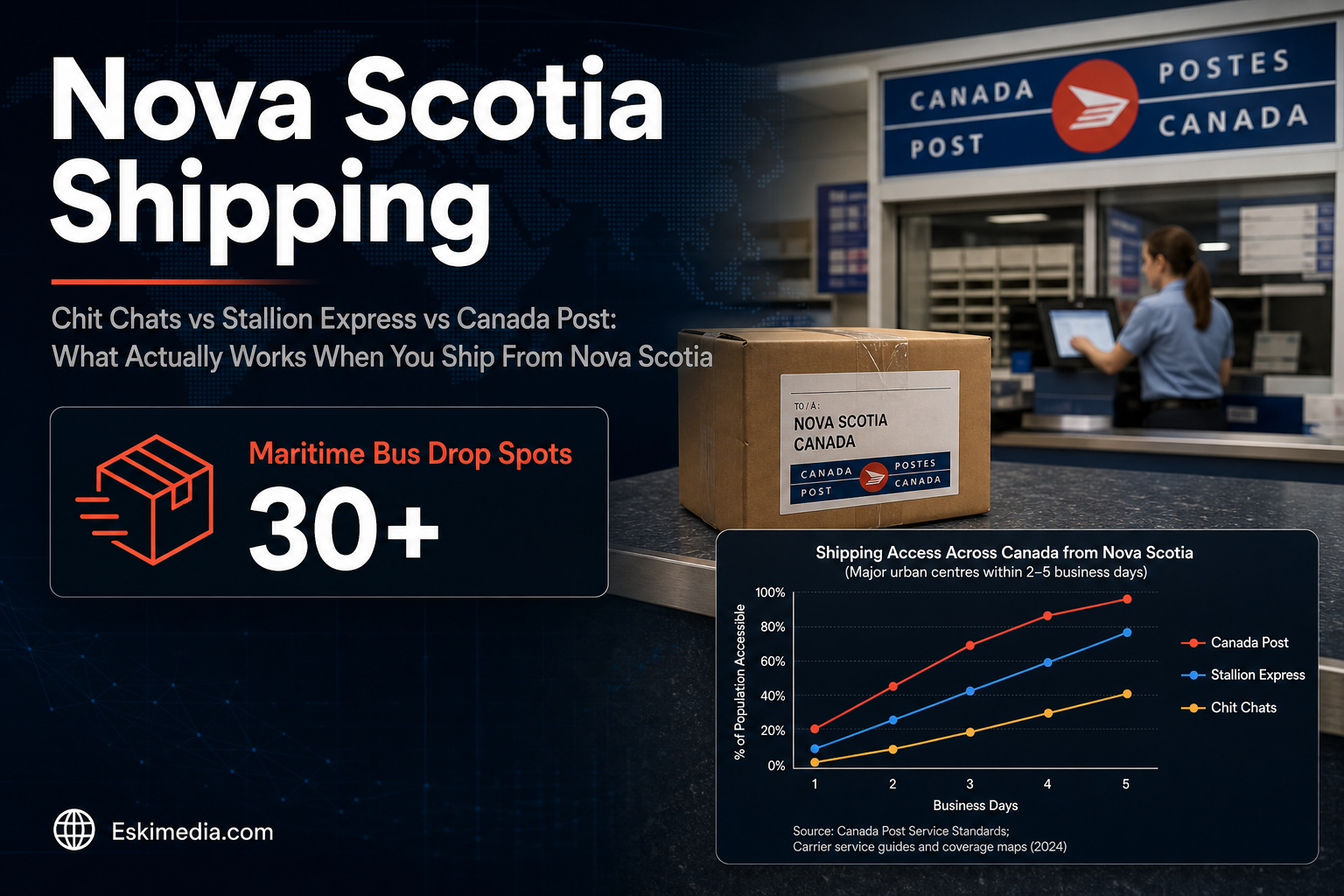
- Carrier choice. Not every Canadian shipping service handles duty prepayment and CUSMA claims the same way. Our comparison of Chit Chats, Stallion Express and Canada Post from Nova Scotia covers what’s available locally.
- Canadian tax on the Canadian side. Exports are generally zero-rated for GST/HST, so you shouldn’t be charging HST to U.S. customers. Check your store charges the right tax for each destination; our HST checkout test covers the Canadian side.
Where to Keep an Eye on Changes
Canada Post’s U.S. shipping page, Export Development Canada’s updates for exporters, and your carrier’s notices are the three sources worth checking monthly. A rate change doesn’t require rebuilding your store if your product data and checkout duty settings are in place. It just changes the numbers.
Setting up HS codes, country of origin, U.S. market settings and duty display is store configuration work we do as part of our e-commerce service, on Shopify or WooCommerce. If your U.S. orders dropped off after 2025, or customers are refusing parcels, send us your store URL and how you ship to the U.S. today.