
Short-Term Rental Listing Photos in Nova Scotia: The Rules to Check First and a Shot List That Books Nights

Two things decide whether a Nova Scotia short-term rental gets booked. The first is whether it’s allowed to be listed at all: provincial registration, the registration number on the listing, and, in HRM, the right municipal approval. The second is whether someone scrolling past a hundred cottages and condos stops on yours. That’s mostly the photos.
This page covers both, briefly on the rules and in more detail on the photos, because the rules are a checklist and the photos are where most listings lose bookings.
The Rules to Sort Out First
This is a summary, not legal advice. Regulations have changed several times in the last few years, so confirm the current details with the province and your municipality.
- Provincial registration. Short-term accommodations in Nova Scotia must register with the province’s Short-term Rentals Registry, and booking platforms must register too.
- Your registration number on the listing. Hosts are expected to show their registration number on their listings. Airbnb and other platforms have a field for it. Casa Scotia’s guide walks through where it goes on each platform.
- Municipal rules in HRM. Since 2023, Halifax has separated residential and commercial short-term rentals. In residential zones, they’re generally limited to the operator’s primary residence. Rules for rural HRM were updated again in early 2026. The municipality’s short-term rental page has the current requirements and permits.
- Other municipalities have their own rules. Check with yours if you’re outside HRM.
Get these in place before you spend money on photography. A beautiful listing that has to come down helps no one.
What the Photos Need to Do
A guest deciding between your place and the one next to it in the search results is answering four questions from the photos, usually in this order:
- Is it the kind of place I want? The first photo decides whether they click at all.
- Where will we sleep? Every bedroom, clearly, with the bed configuration obvious.
- Is it clean and as described? Bathrooms and kitchen, in good light.
- What’s the experience? The view, the deck, the hot tub, the beach access, the fire pit.
Listings that lose bookings often fail one of these. Typical failures: a dark first photo, bedrooms that can’t be told apart, no bathroom photo, or the ocean view the listing title promises showing up only in photo 14.
A Shot List for a Nova Scotia Rental
| Shot | Why it matters | Tip |
|---|---|---|
| Hero shot: the single best reason to book | It’s the thumbnail in search | For coastal and lake properties, this is often the view or an exterior with the water. Shoot it in good light |
| Exterior and approach | Guests want to recognize the place when they arrive | Include parking and the entrance |
| Living area, wide | Shows space and layout | Shoot from a corner at chest height |
| Each bedroom | Answers “where will we sleep” | Make the bed size obvious. Add one detail shot if it has something special |
| Kitchen | Families and longer stays care | Clear counters; show the appliances they’ll use |
| Each bathroom | Cleanliness signal | Towels folded, toilet lid down, bright light |
| Outdoor spaces | The Nova Scotia selling point | Deck, fire pit, hot tub, dock, trails |
| Aerial view | Shows the setting and privacy in a way ground photos can’t | Especially useful for waterfront and rural properties |
| Local area | Sells the trip, not just the building | Only photos of places that are genuinely close |
Photos That Help, and Photos That Hurt
- Accurate beats flattering. Wide-angle lenses that make a small room look like a ballroom lead to disappointed guests and bad reviews. Show the space honestly.
- Seasonal photos should match the season. A summer listing with snow on the deck in the hero shot loses clicks. A winter listing with only July photos sets the wrong expectation.
- Don’t stage what isn’t there. Virtually adding furniture or hiding permanent features misrepresents the property. If you use any digital staging, label it clearly.
- Update after changes. New furniture, a renovated bathroom or a new hot tub deserve new photos.
- Light matters most. Shoot on a bright day with every light on and curtains open. Dim interiors are one of the most common problems on phone-shot listings.
Video and Aerials
Short vertical videos work well on Instagram and Facebook, where some guests first come across a rental before they ever open Airbnb. They’re useful for showing flow through the space and the setting outside. Our article on Instagram Reels for Halifax businesses covers what tends to reach people locally.
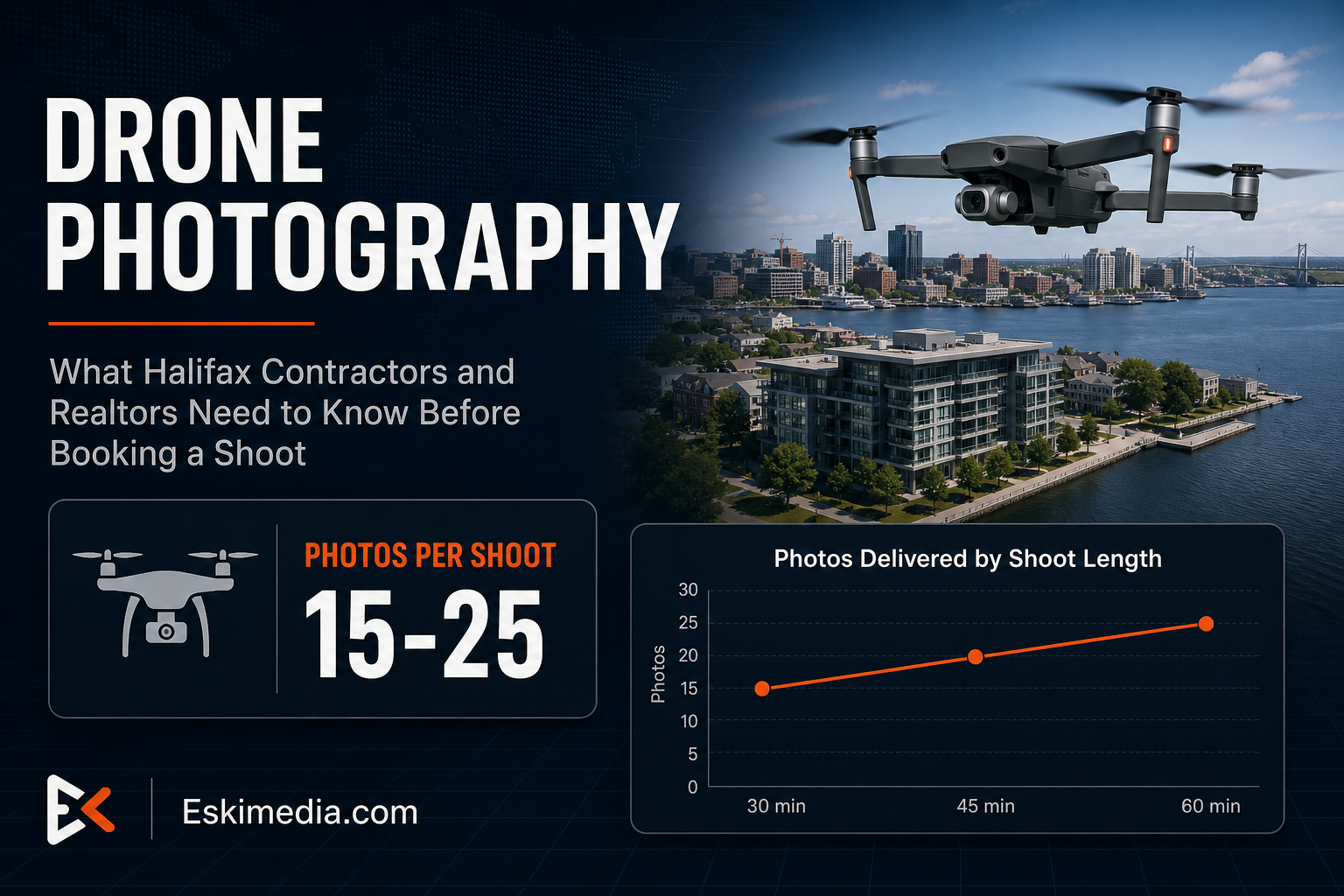
Aerial photos are especially useful for waterfront, rural and larger properties, where the setting is the product. Drone flights for commercial use need a certified pilot, and some locations in HRM need an airspace authorization. See the drone rules for Halifax.
DIY or Hire a Photographer?
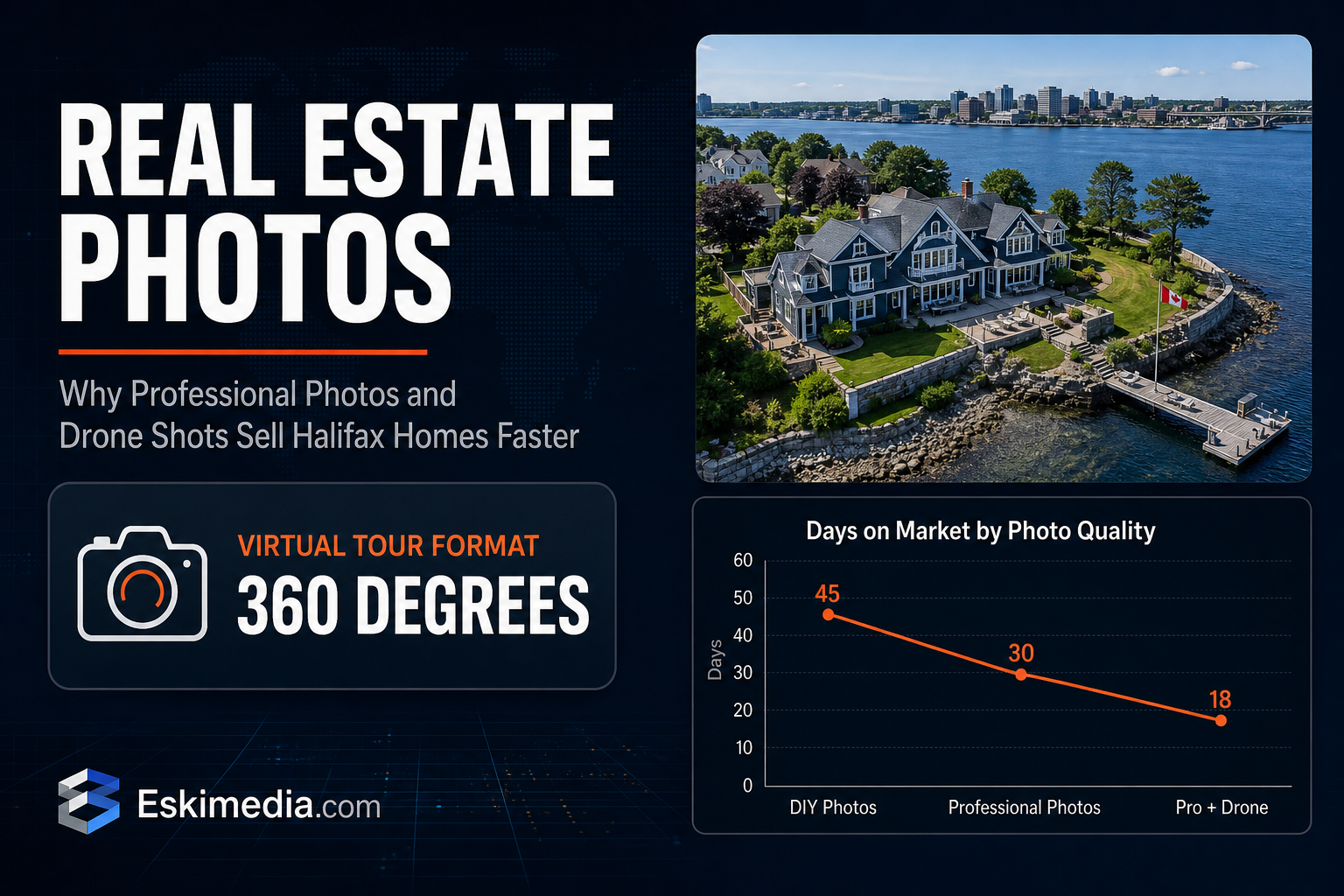
A newer phone in good light, with a tidy, staged space, can produce acceptable listing photos. If your property competes with dozens of similar ones, or its selling point is a view or a setting that needs an aerial, professional photos are often worth the cost. That’s a judgment you can make after comparing your listing with the top results for your area.
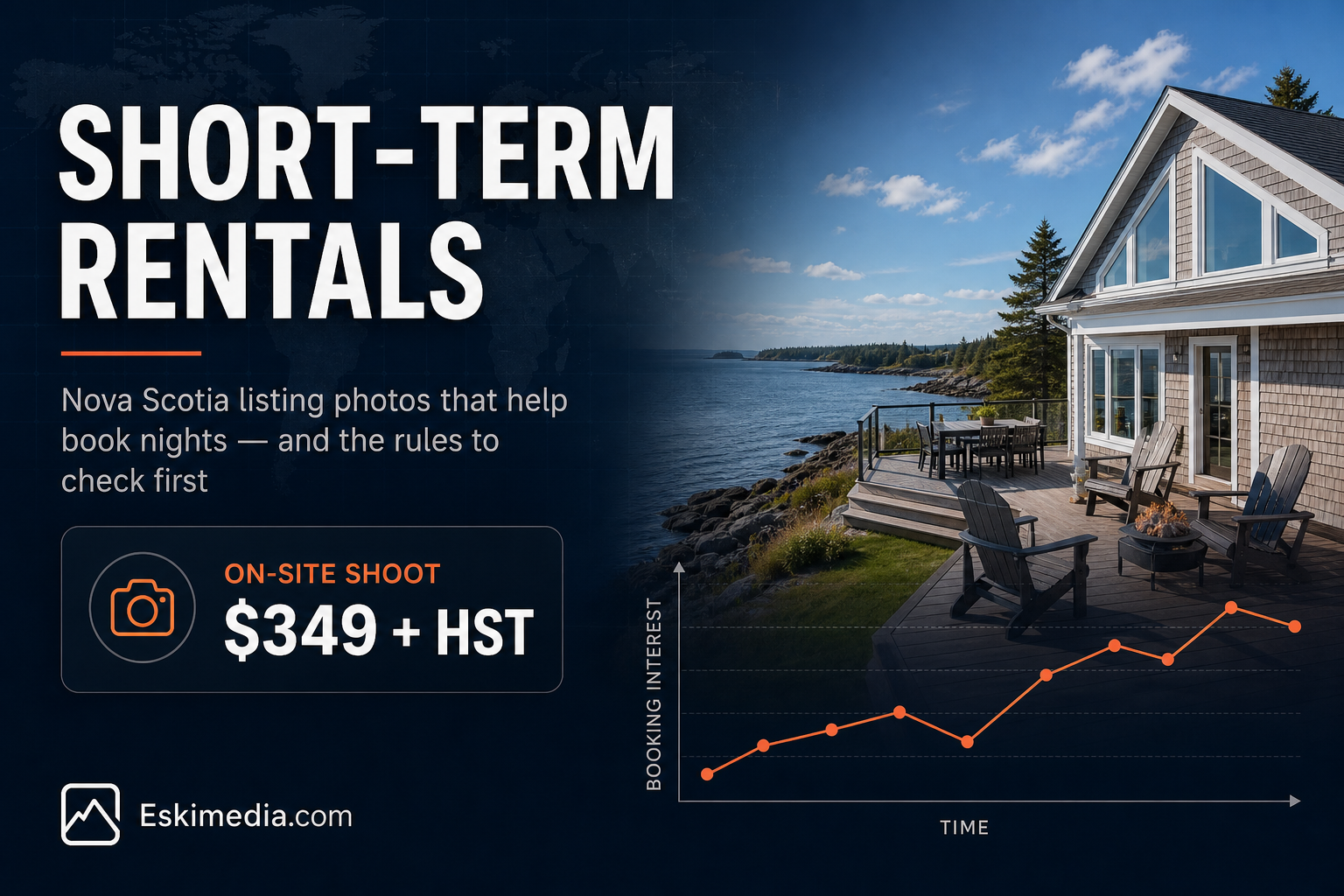
Our on-site shoot is $349 plus HST. It includes up to two hours on site, 15 edited photos, three short vertical videos and aerial coverage. That covers most rentals in a single visit. If you only need aerials, a drone-only shoot is $299 plus HST for raw footage and stills. For more on how professional photos affect how properties are perceived, see our real estate photography article.
If your rental is registered and ready, send us the address and the season you want to market.