

Search “Google Ads cost per lead” and you’ll find tidy tables: roofing $124, HVAC $149, plumbing $183. They’re almost all from U.S. agencies, in U.S. dollars, built from U.S. accounts in markets many times the size of HRM. For a Nova Scotia business deciding whether to spend $800 a month on ads, they don’t tell you much.
A more useful number is the one only you can calculate: the most you can afford to pay for a lead and still make money. Then you check whether Google’s click prices in your area make that achievable. That takes about half an hour, and it tells you whether ads can work for your business before you spend anything.
Why Borrowed Benchmarks Mislead
- Different market. Click prices depend on how many advertisers compete for the same searches in the same place. A handful of HVAC companies bidding in HRM is not the same auction as hundreds in Houston.
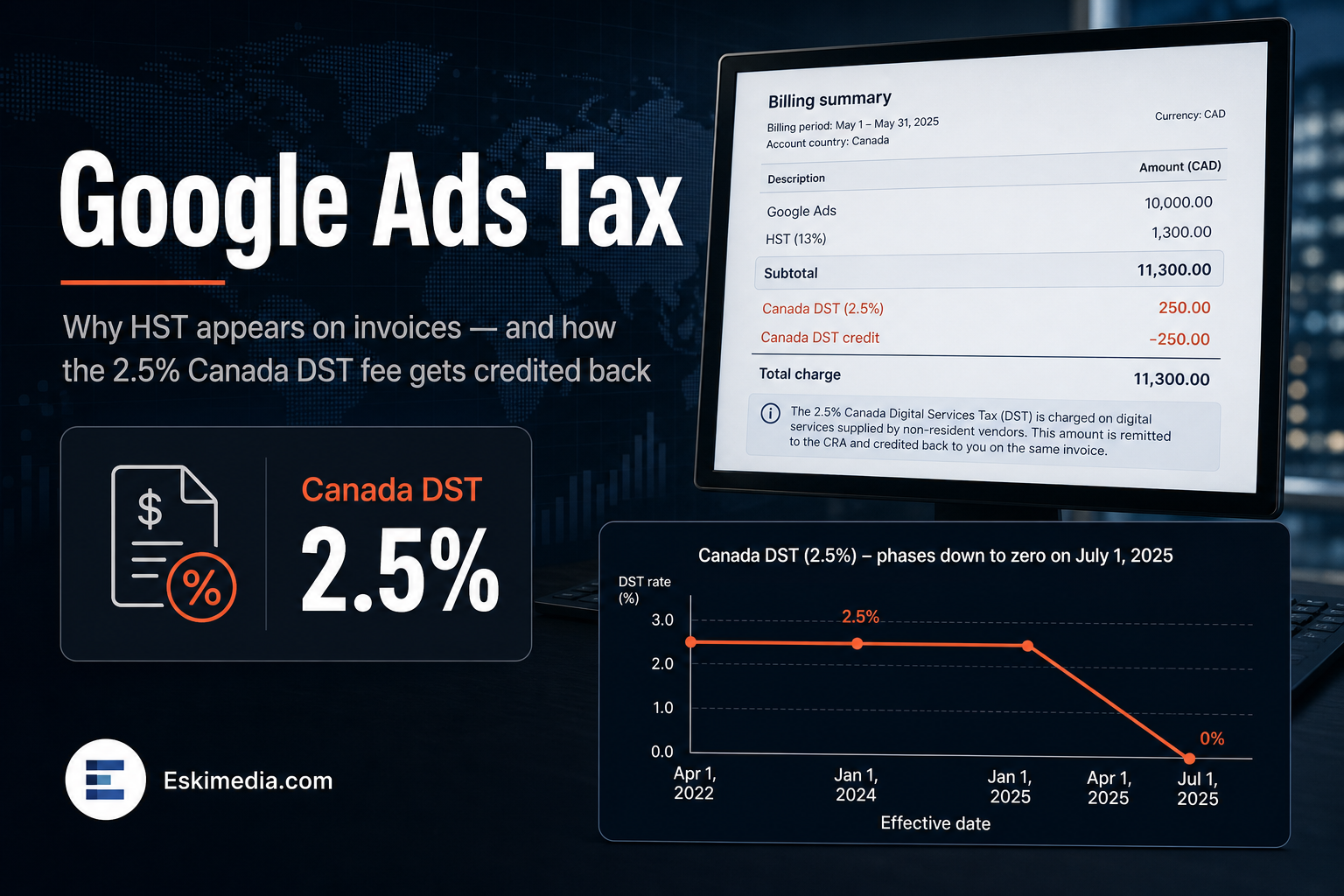
- Different currency and tax. A U.S. benchmark in U.S. dollars isn’t comparable to your Canadian-dollar spend, and it says nothing about HST on your invoice. More on that in why your Google Ads invoice shows HST.
- Different definition of “lead”. Some benchmarks count every form fill, spam included. Others count only qualified calls. The number means nothing without the definition.
- Different season. A Halifax roofer’s February and a Halifax roofer’s May are different businesses.
Step 1: Work Out What a Lead Is Worth to You
You need three numbers from your own records:
- Average job value. What a typical job from a new customer is worth.
- Gross margin. What’s left after materials and direct labour, as a percentage.
- Close rate. Out of every ten genuine inquiries, how many become paying jobs.
Then:
Break-even cost per lead = average job value × gross margin × close rate
That’s the most a lead can cost before the ad loses money on the first job. You’ll want to pay well under it, because the ad account is not your only cost. A target of a third to a half of break-even is a sensible place to start.
Example (illustrative numbers)
A heat pump installer with an average job of $6,000, a 35% gross margin and a 25% close rate:
- $6,000 × 0.35 = $2,100 gross profit per job
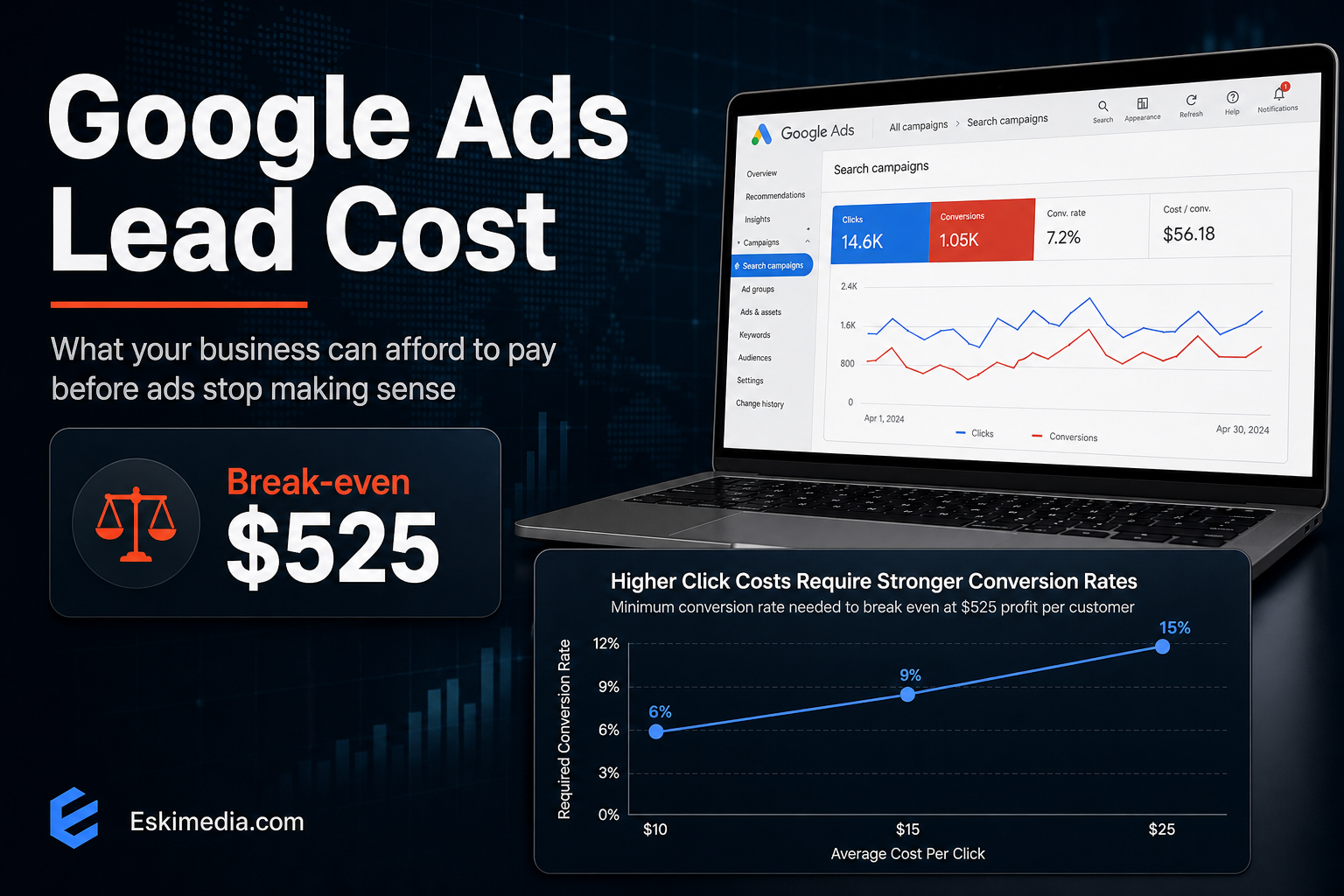
- $2,100 × 0.25 = $525 break-even cost per lead
- Target at one-third of break-even: about $175 per lead
For a business with repeat customers, such as a salon, a dentist or a lawn care company, use the value of a customer over a year or two rather than one visit. A $60 haircut is a poor basis for the decision. A client who books eight times a year is a much better one.
Step 2: Find What Clicks Cost in Your Area
Open Google Ads’ Keyword Planner (it’s free inside a Google Ads account) and choose “Get search volume and forecasts” or “Discover new keywords”. Set the location to Halifax or the specific communities you serve, then enter the searches a customer would actually use: “heat pump installation halifax”, “heat pump installer near me”, and so on.
Look at the two bid columns. Google defines the top of page bid low range as roughly what the cheaper 20% of advertisers have paid, and the high range as roughly the 80th percentile, for your chosen location and network settings. Plan around the high range. The low range is optimistic for a new account.
Step 3: Convert Click Cost Into Lead Cost
Cost per lead = cost per click ÷ conversion rate
The conversion rate is the share of clicks that become a genuine inquiry. It depends mostly on your landing page and how well the ad matches the search. Test the numbers at a few conversion rates:
| If a click costs… | At 5% conversion | At 8% conversion | At 12% conversion |
|---|---|---|---|
| $6 | $120 per lead | $75 per lead | $50 per lead |
| $10 | $200 per lead | $125 per lead | $83 per lead |
| $15 | $300 per lead | $188 per lead | $125 per lead |
Put your own Keyword Planner figure in the first column. For the heat pump example with a $175 target, $10 clicks work at around 6% conversion or better. $15 clicks need close to 9%. That tells you whether ads are viable, and how good the landing page has to be for them to work.
Step 4: Test Small, Then Recalculate
Keyword Planner gives estimates. Real numbers come from a short, controlled test:
- Set up proper tracking first: calls from the ad, calls from the website and form submissions. Without it, the test is guesswork. Our checklist for Google Ads that get clicks but no calls covers the setup.
- Run a tightly targeted search campaign for four to six weeks, on your highest-value service.
- Count genuine leads, not reported conversions. Spam and wrong numbers come out. See why reported leads and real leads differ.
- Follow each lead through to a job or no job.
- Recalculate with real cost per lead and real close rate.
After that test, you’ll have a Halifax benchmark for your own business, which is worth more than any published average.
If the Numbers Don’t Work
If your target cost per lead is below what clicks will realistically produce, you have options before giving up on paid search:
- Raise the conversion rate with a faster, more specific landing page.
- Narrow to high-value services where the math works, and leave small jobs to organic search and referrals.
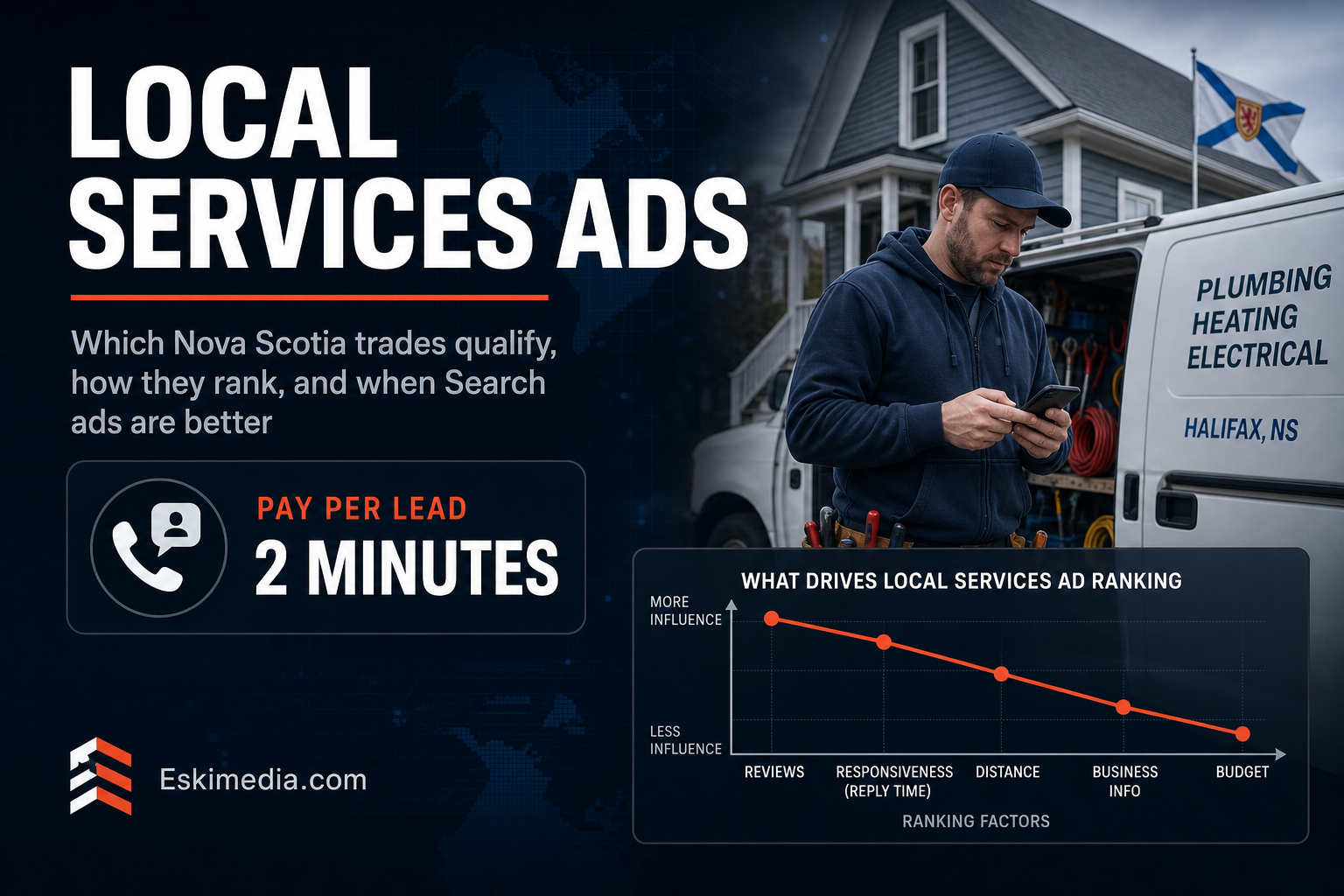
- Check Local Services Ads, which charge per lead rather than per click. Eligibility and estimated lead costs for your trade are covered in Local Services Ads in Nova Scotia.
- Put the budget into local SEO instead, which is slower but doesn’t charge per click. How long that takes depends mainly on your competition.
This is the calculation we’d want any business to run before settling on a budget. It’s also a sensible first step before hiring anyone for Google Ads management, us included. If you’d like us to run it with your numbers and your area’s real click prices, send us your average job value and the services you most want more of.